How to Manage Driving-Test Nerves
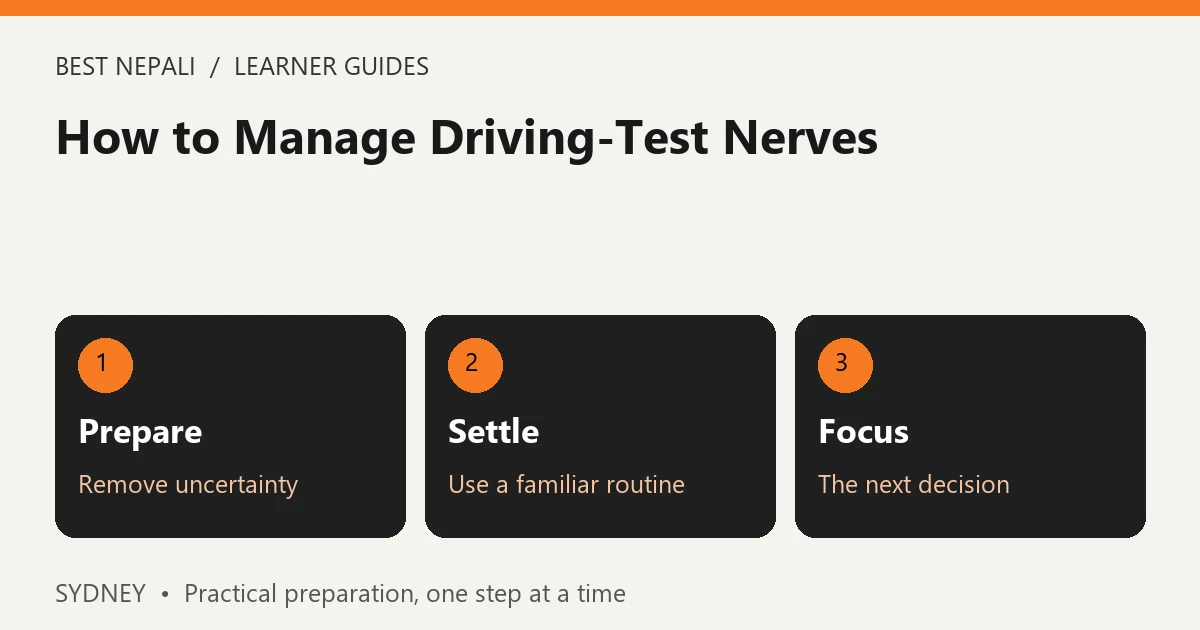
Feeling nervous does not automatically mean you are unprepared. The useful question is whether you can still pay attention and make safe decisions. Reduce what you can organise in advance, then keep the on-road task simple.
Separate uncertainty from a skill gap
Write down the worry. “I do not know where to meet” needs an arrangement confirmed. “I still need help at intersections” needs practice. “I worry about being judged” may improve with a realistic practice assessment and familiar routine. These concerns need different responses.
Tell your instructor what happens under pressure. Specific examples are useful: rushing instructions, stopping looking ahead or forgetting a routine you normally know.
Rehearse the process
Ask for a practice drive with fewer prompts and a debrief. Its purpose is to find next steps, not predict a guaranteed pass. Practise recovering your focus after an imperfect moment instead of treating every lesson as all-or-nothing.
Use the test-day checklist to remove transport and paperwork uncertainty. Familiarity with the car and meeting plan may help more than another last-minute route video.
Create a short arrival routine
- Prepare documents and appointment details the day before.
- Leave space in the schedule for a small delay.
- When safely parked, use your normal seating and preparation routine.
- Ask process questions before starting.
- Focus on the next instruction and situation, not the final result.
Choose an easy routine. Adding ten new techniques on test morning creates another task to worry about.
If you think you made a mistake
Do not debate your score internally while driving. Return attention to what is happening now and discuss the assessment later. Our NSW test mistakes guide explains why perceived errors are not a reliable result forecast.
If you feel unable to drive safely, tell the officer or instructor. Passing on a particular date is never more important than safe vehicle control.
Get support that fits the problem
This is practical preparation advice, not anxiety treatment. If distress is persistent or makes driving unsafe, seek suitable professional support and discuss a slower plan. Ask a qualified health professional about medication or products that might affect driving.
The UK DVSA’s test-nerves resource also discusses preparation and worries. Its assessment rules are UK-specific; use NSW sources for local licensing requirements.
Frequently asked questions
Does being nervous mean I should cancel?
Not automatically. Discuss readiness with your instructor and consider whether you can drive safely and independently.
Should I do a long lesson just before the test?
Discuss what keeps you focused. Extra practice is not always useful if it leaves you tired or overloaded.
What helps after a disappointing result?
Take time to settle, then review specific feedback and plan the next practice step. A result is not a judgement of your worth.
Plan your next step
Arrange focused preparation and read what to expect from a lesson.